Sunday, December 4, 2011

Photographic Overview of The Art of Giving December 2011

A big show, an eclectic show. A show that needs to be seen.

Please click on any image to enlarge.

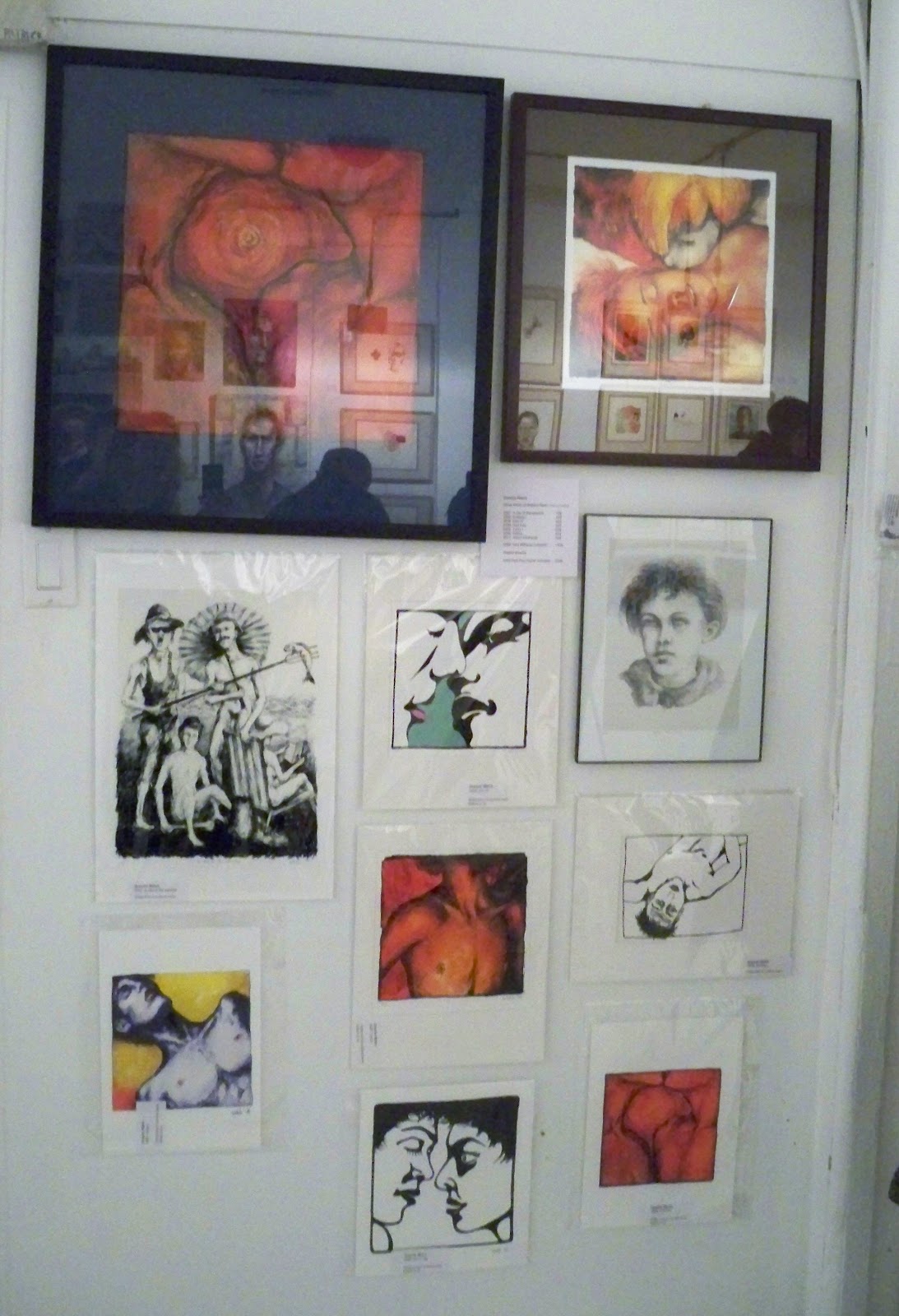
Mique Michelle's panels.
Mathieu Laca's portrait of Patrick John Mills.

Patrick S. Greene's art.
Christine Leger's art.
Looking through front door.
Dino by Jack Steklenburg.
James Boyd (1928 - 2002)


Buffet table centre, main floor.

Cody playing guitar and singing.
Adam Davidson's art.

Patrick John Mills' art.
Shannon Lee's art.


Joe Pacheco's art.
Mathieu Laca


Jack Steklenburg


Michele LeCourtois's art.
Graeme Welch's art.

Patrick John Mills' art, second floor.
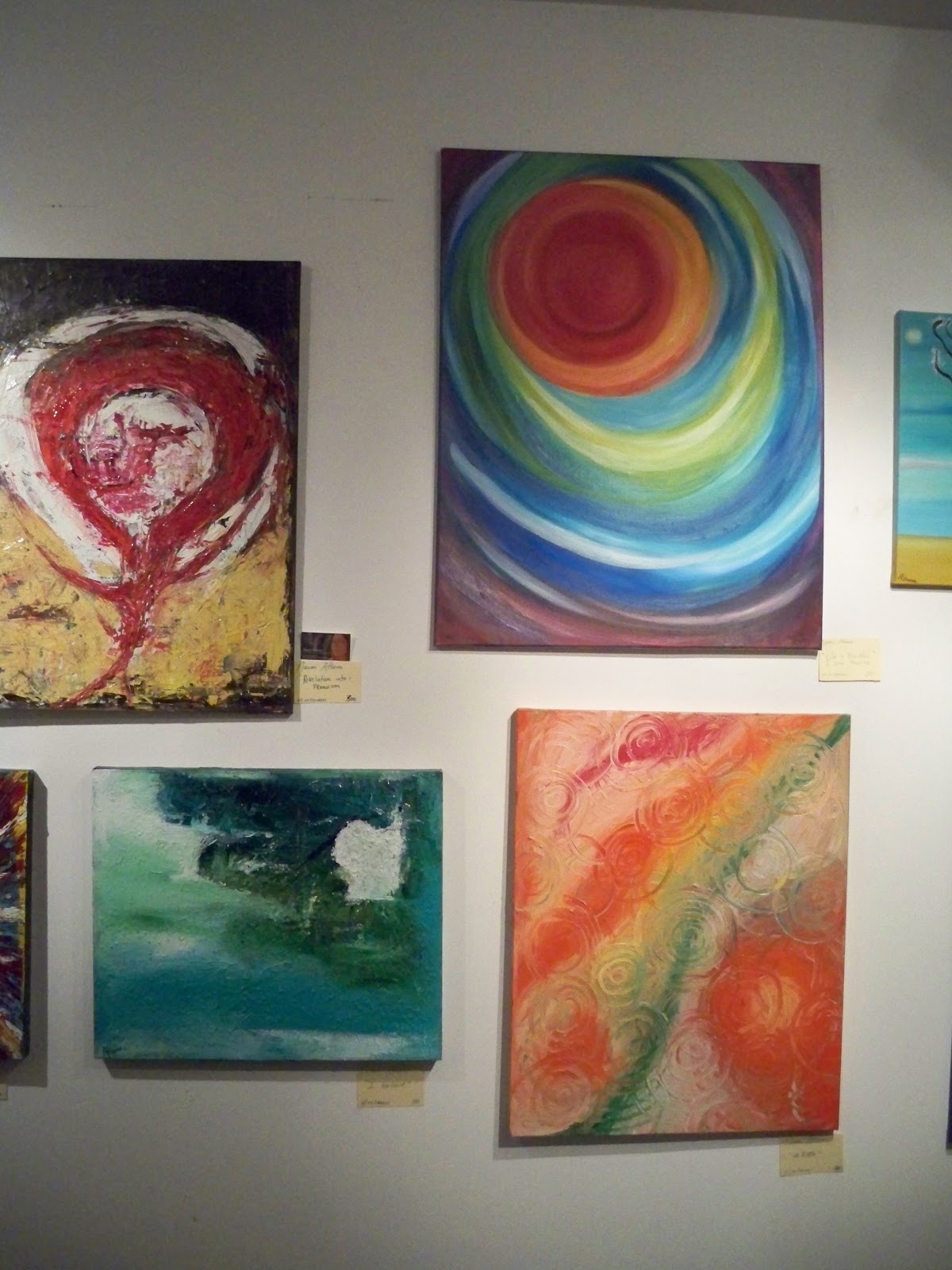
Naomi Athena's art.


The gallery at closing time.

Friday, December 2, 2011

The Art Of Giving


Patrick John Mills should be thanked for he is one who gives of himself to the artists and art lovers all year round so it is fitting to say thank-you Patrick Mills. Once again, Patrick gave the gallery space to the artists without question nor request of thanks.


This must-see show will bring happiness and joy to all who view the exhibit.

Wednesday, November 30, 2011

The Marilyn Suite 2011

Or, simply, The Marilyns. Strange name for a group of computer keyboards, n'est-ce pas?

One must recall the pop art of the sixties and seventies to understand the reference, in particular, the endless silk screen portraits that Andy Warhol did of various celebrities, in particular, female icons such as Liz Taylor, Jackie Kennedy, Brigitte Bardot, Debbie Harry and, of course, Marilyn Monroe.

His technique was to layer colour after colour over an acrylic background thereby using the same material and same process and yet changing the image to reflect different moods and, apparent to some, shifts in perspective. The Lemon Marilyn presents a sunnier mood than the Blue Marilyn. Same woman, same pose, different feeling.

In The Marilyn Suite, I have taken the same Dell keyboard and using the same technique and material, I change the appearance and in some cases, the integrity of the board as when I reverse it to use the underside or when I melt it and change its form.

Warhol took polaroid photos to create his art; I take keyboards and create mine.

Thursday, November 10, 2011

Raw Naked Soul: Tracing the Artist’s Experience

Is it possible to completely translate one’s life experience onto canvas? How genuine is this translation, if it can be achieved? Many of the works produced in our current show, Raw Naked Soul, address these thoughts, and many more. These ideas, in particular, have resonated among artists from the beginning of the history of art. As a result, many movements and waves in art’s colourful history have attempted to engender these ideas, but have faded with the rise of new waves in their place.

Patrick John Mills, Summer II, Oil on canvas, 2011

The works in Patrick John Mills's current solo exhibition demonstrate a translation of his own life experiences in an abstract way. At times his paintings completely abandon pictorial representation in favour of abstract applications of colour and thick layers of paint on canvas that speak of various truths. A canvas, such as those from Mills's Summer Series, tells a tale that can be interpreted in many different ways. Mills painted this series on an easel in the backyard of his studio at the height of summer. He incorporates the brilliant colours of the season and paints its story with a strict attention to the detail of colour (the most important element of this series of paintings). There is no figure present in these paintings. This feature thereby implicates that the artist's experience becomes indefinite (in the sense of the removal of direct representation) for the sake of cultivating a shared abstract moment with the viewer. 

However, that is not to say that life experience cannot be translated onto canvas. The abstract quality of Mills’s Summer Series indicates that what is translated here is a feeling or a sense, and not a direct pictorial representation of the experience. The viewer cannot exactly consider a specific memory or experience in Mills's life, but is able to share the feelings that result from said memory or event. This abstract interpretation succeeds in presenting a true experience to the viewer because he or she feels the same emotion that has been transferred onto the canvas. In a sense, to feel the same feelings as the artist draws the viewer closer to his world of memories and creates a deeper connection that is captured in the many layers of colour on the canvas. 


Many of the canvases in this series are small and are often juxtaposed next to a monumental canvas. The small canvases essentially provide various “snippets” of experiences – flashes of colour and paint that indicate feelings are experienced by the viewer in the briefest of minutes, while the monumental works in the show engulf the viewer in Mills’s painterly emotions and allow he or she to linger in the moment. This juxtaposition essentially relates to how we remember past experiences: sometimes our memories come to us in small clips, while at other times we are able to remember larger feelings that garner greater emotional impact.

Mills constructs a portrait of himself through these abstract canvases that evoke emotional responses to personal memories. He simultaneously exposes himself; raw, naked, and emotional, while maintaining a hold of private personal memories. We are left feeling a little more connected to the artist as we share in the sense of the memory.